
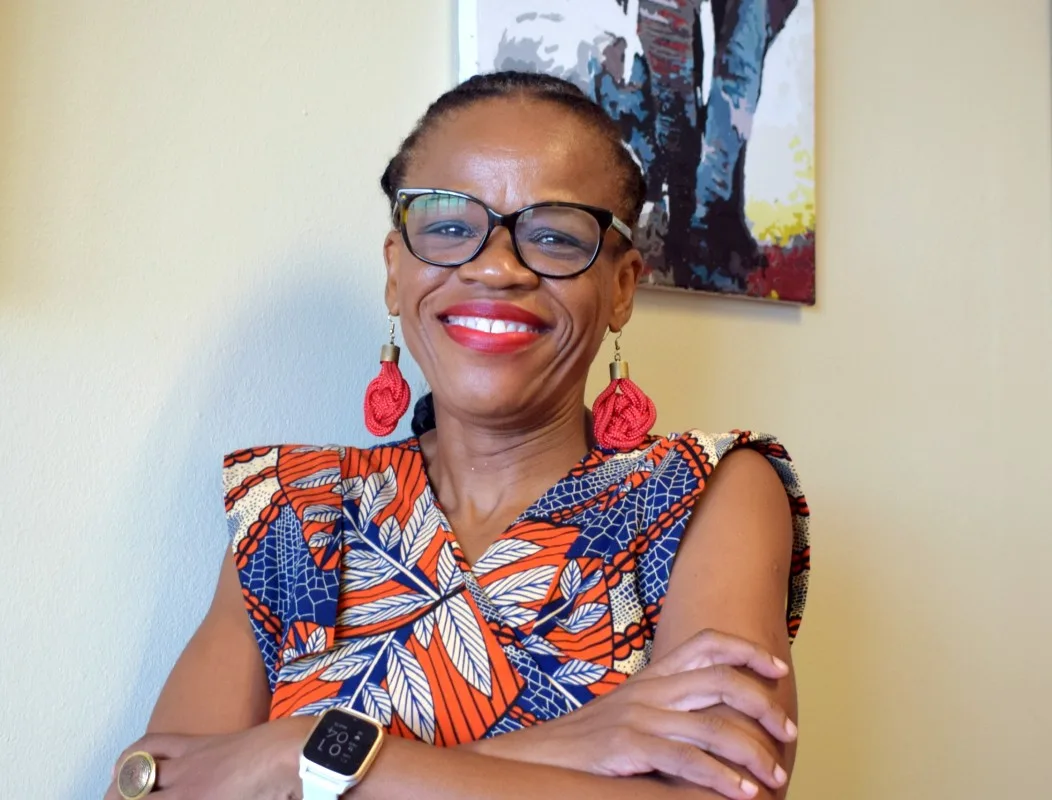
Across Africa, respiratory disease remains a major yet often under-recognised health challenge, shaped as much by systems of care and access as by clinical need. For Professor Refiloe Masekela, clinician scientist, paediatric pulmonologist, and former President of the Pan-African Thoracic Society (PATS), improving outcomes requires more than medical expertise alone. It requires rethinking how care, training and diagnostics are delivered so that they reach patients where they are.
Her work spans clinical care, research, education and health systems strengthening, but is anchored in a consistent principle: healthcare must respond to the realities of patients’ lives, not the other way around. Today, alongside her role as Dean of and Head of the School of Medicine at the University of KwaZulu-Natal (UKZN) in South Africa, she continues to focus on building respiratory capacity across the continent through training, diagnostics and system-level reform.
A path shaped by paediatrics and inquiry
Professor Masekela’s entry into medicine began with paediatrics, a specialty she was naturally drawn to for its holistic approach and emphasis on the child within their wider family context. That early clinical environment shaped both her values and her later academic direction.
“I enjoyed working with children, while a lot of my colleagues avoided paediatrics. I tended to be the one who put my hand up because that’s something that I felt a great affinity with. I have a very strong work ethic, and I find that working in paediatrics is very holistic — management of the child and the family rather than just the individual patient.”
Her transition into respiratory medicine emerged during doctoral research on chronic respiratory disease in children living with HIV. What began as a focused research project gradually reshaped her clinical trajectory into paediatric pulmonology, where inquiry and practice became closely linked.
“I fell into lung health because when I was training and decided to do my PhD, it was in chronic respiratory diseases in children with HIV infection. I enjoy integrating the two. If I see a person with a problem, or there’s a clinical question that can be answered by investigating, that’s usually what drives the science.”
When systems shape outcomes
Across her clinical experience, Professor Masekela has repeatedly seen how health outcomes are shaped long before treatment begins. Geography, infrastructure and service design often determine whether patients are diagnosed early, misdiagnosed, or missed entirely.
In rural settings, patients’ first point of contact is often a local clinic with limited diagnostic tools, where chronic respiratory conditions may be overshadowed by more familiar infectious disease diagnoses.
This gap between clinical systems and lived experience is a recurring theme in her work:
“I think really speaking to patients, their experiences are very different because, of course, there’s what’s in the textbooks and there’s people’s lived experience.”
Even when treatment exists within the system, access is often constrained by distance, transport and service fragmentation rather than availability alone.
“The issue is often access — having to travel 200 kilometres to a regional hospital, for example.”
For Professor Masekela, this reality has shaped a clear clinical principle: prescribing care is not enough without ensuring it can be delivered.
“I can write a prescription for an inhaler, but if I don’t look at the systems for access and ensure the patient can actually access the treatment, then I’m wasting my time and the patient’s time.”
Misconceptions that delay care
Alongside structural barriers, Professor Masekela highlights persistent misconceptions around asthma and inhaler use that continue to influence treatment decisions and outcomes.
“There are still many myths around asthma and inhalers. Some people don’t want to use inhalers because they think they’re addictive.”
These beliefs can be reinforced by experience, particularly when asthma is poorly controlled and outcomes are severe, sometimes leading families to draw incorrect conclusions about treatment.
“If people are only using a reliever inhaler and then die from asthma, families may make the link that the inhaler caused the death.”
Addressing this requires sustained, community-level engagement rather than one-off interventions. One approach has been the use of creative education methods in schools to improve understanding from an early age.
“Continuous education and breaking down misconceptions around inhalers is still necessary at community level.”
Building respiratory capacity across Africa
Through the Pan-African Thoracic Society, Professor Masekela has focused on addressing a critical shortage of respiratory specialists across the continent. Historically, training opportunities were concentrated in a small number of countries, limiting regional capacity development.
In response, new training hubs and adaptable curricula have been developed to expand access and build networks of expertise across different health systems.
“We try to create centres of excellence around the continent so the training is not just for the individual, but creates networks that uplift the quality of research.”
A key pillar of this effort is the MECOR programme, which has trained more than 400 healthcare professionals across disciplines, reflecting the multidisciplinary nature of respiratory care.
“We’ve trained over 400 students. We’ve had doctors, nurses, pharmacists, microbiologists, physiotherapists — anybody interested in lung health.”
Diagnostics and system readiness
A parallel challenge in respiratory health across Africa is access to diagnostics, particularly lung function testing such as spirometry. Without these tools, diagnosis and disease monitoring remain limited, especially in primary care settings.
To address this, structured training programmes have been developed and expanded to include a broader range of respiratory diagnostics.
“It’s a certified course where students can come and learn how to conduct spirometry.”
This work aligns with her involvement in the FIRS Lung Health Task Force, which focuses on scalable, quality-assured approaches for resource-limited settings.
“We are probably the only continent that developed a programme that can be delivered in the least-resource settings while still maintaining strong quality control.”
The next challenge is implementation at scale — embedding tools and training within health systems and ensuring policy-level support for delivery.
Climate, equity and the next frontier
Increasingly, respiratory health in Africa is shaped by the intersection of climate change and socioeconomic inequality, with environmental exposures disproportionately affecting vulnerable communities.
“The impact of climate change is really worse where poverty is rife.”
This has become a growing focus within training and research programmes, including cross-country collaborations examining climate-related respiratory outcomes.
“Our focus for the next few years will be climate and lung health outcomes.”
Alongside this, she has helped establish a women’s leadership programme to address disparities in career progression despite strong academic performance among female trainees.
“It’s been transformative.”
A consistent mandate: bringing care closer
Across her clinical, academic and leadership work, Professor Masekela returns to a clear and consistent mandate: healthcare systems must be designed to ensure access in practice, not only in principle.
“Bring the clinic to the patient, not the other way around.”
As she takes on her role as Dean, her focus remains on strengthening systems, expanding training capacity and improving equitable access to respiratory care across Africa.
“I still have the five-year plan,” she says with a laugh. “Then we’ll see after five years.”
The direction is clear: building systems that close the gap between knowledge and access, and ensuring that quality respiratory care is determined by need — not geography.