

We’re excited to launch “Meet the Members”, a new FIRS feature that highlights the people behind the science and care in global respiratory health. Each month we will profile a member from one of our nine member organisations, sharing their journey, passions, and contributions to advancing lung health worldwide.
- Can you introduce yourself and your current role within The Union?
I’m Dr Kavi Velen, Chief Scientific Officer at The Union. I lead the organisation’s scientific strategy across tuberculosis and lung health. My work focuses on shaping research and innovation priorities, supporting high impact programmes, and building partnerships that help translate evidence into practice, particularly in low- and middle-income countries.
- What inspired you to pursue a career in respiratory medicine or research?
I grew up in South Africa, where tuberculosis was and remains a significant public health challenge. Early in my career, I also saw first-hand the burden of TB in communities where access to timely diagnosis and care was limited. This was further shaped by my own personal experience. My late father was a TB survivor who later developed lung cancer, which he ultimately succumbed to. That combination of personal and professional exposure is what drew me into this field and continues to drive my work.
- What do you see as the most pressing respiratory health challenge in low- and middle-income countries today?
Fragmentation of care remains a major challenge. People often present with the same symptoms such as cough, breathlessness, or fever, but systems are designed around single diseases. This leads to delays, missed diagnoses, and inefficiencies. Moving towards integrated and person-centred care is essential if we want to meaningfully reduce the burden of respiratory disease.
- How is The Union contributing to improving lung health?
The Union operates across the full spectrum, from generating evidence to supporting countries with implementation. We work closely with national programmes to strengthen TB services, while also expanding into integrated lung health approaches that link communicable and non-communicable diseases. The Union also has significant convening power, with a membership base spanning more than 100 countries. We are increasingly focused on leveraging this to deliver end to end solutions, from research and innovation, through to policy and implementation.
- What role should The Union play in shaping policy on air quality and tobacco control?
A strong and consistent one. The evidence is clear, but policy action is often uneven. The Union has a long history in tobacco control, and we are increasingly engaging in air quality as a critical driver of lung disease. Recent global convenings, including the World Conference on Tobacco Control, have reinforced this commitment. The Dublin Declaration emphasised the urgency of accelerating smoking cessation and strengthening tobacco control measures. The Union should continue to play a leading role in supporting countries and maintaining momentum in this space.
- What recent development in respiratory science or care excites you most?
What excites me most is the progress we are now seeing across the TB and broader respiratory care continuum. For many years, innovation in TB was relatively limited, but the last few years have brought important advances in diagnostics, treatment and digital tools.
Innovations such as AI assisted chest X-ray interpretation and more accessible molecular platforms are bringing high-quality diagnostic capacity closer to primary care. The real opportunity now is to ensure these tools are scaled effectively, working closely with partners across the global, regional and country ecosystem so that innovation translates into impact. For broader respiratory health, we are also focused on improving access to essential medicines, such as inhaled corticosteroids, which remain inaccessible for many people with asthma and COPD in low- and middle-income countries.
- How has an international collaboration strengthened your work and that of The Union?
Collaboration is fundamental to how we operate. Many of the challenges we are trying to address, whether in diagnostics, service delivery, or policy, are too complex for any one organisation to solve alone. In the current funding landscape, partnerships are more important than ever. There is a need to align resources, avoid duplication, and ensure that investments translate into impact at scale. Through international collaboration, we can bring together complementary expertise across research, implementation and policy, test new approaches across different settings, and accelerate the uptake of effective solutions.
At the same time, we are looking to broaden our engagement across all facets of lung health, not only TB. This will require us to build new partnerships and re-engage existing ones, while ensuring that collaboration remains grounded in country realities and delivers sustainable impact.
- What advice would you give to early-career professionals wanting to work in global health?
Spend time understanding how health systems function in practice, not just in theory. Some of the most important lessons come from working closely with programmes, communities and frontline providers. Textbooks and publications can only take you so far. It is also important to focus. There is value in going deep and developing real expertise, rather than trying to cover too many areas superficially. Finally, be open to working across disciplines. The challenges we face are increasingly interconnected, and meaningful progress often comes from bridging science, policy and implementation.
- Looking ahead, what is your hope for the future of respiratory health in low- and middle-income countries?
My hope is that we move towards more integrated and person-centred models of care, where people are no longer navigating fragmented systems. Too often, individuals with the same symptoms are managed through separate pathways, leading to delays and missed opportunities for early diagnosis. We now have the tools and evidence to change this, from improved diagnostics to more effective treatments and digital solutions. The priority is ensuring these are delivered at scale, in a way that strengthens health systems and improves access for those most in need. This is closely aligned with the recent World Health Assembly resolutions on primary health care and diagnostics, which reinforce that access to quality care is fundamental. Lung health should be seen as a universal right, and we will continue to work towards this goal, ensuring that no one is left behind.
- Can you share a recent project or initiative that showcases The Union’s impact?
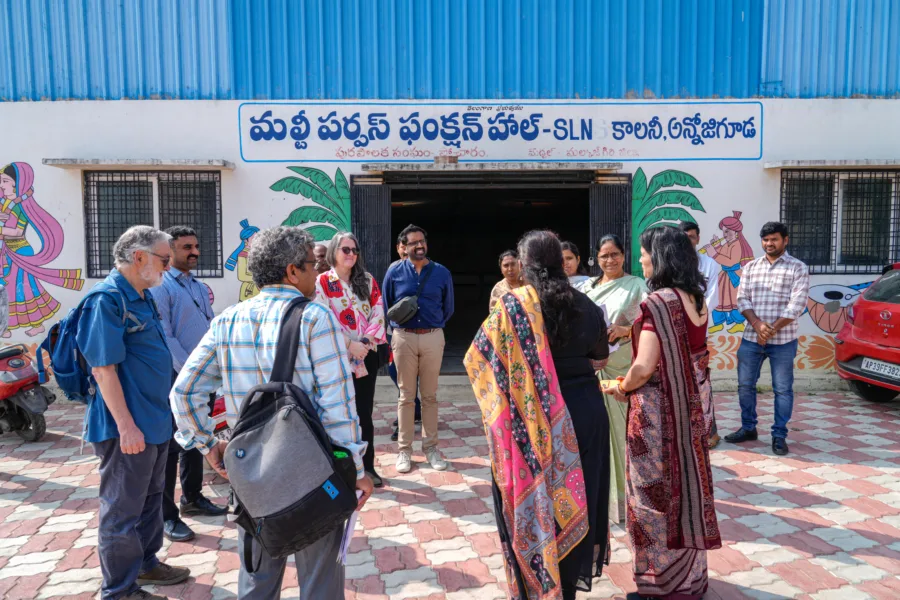
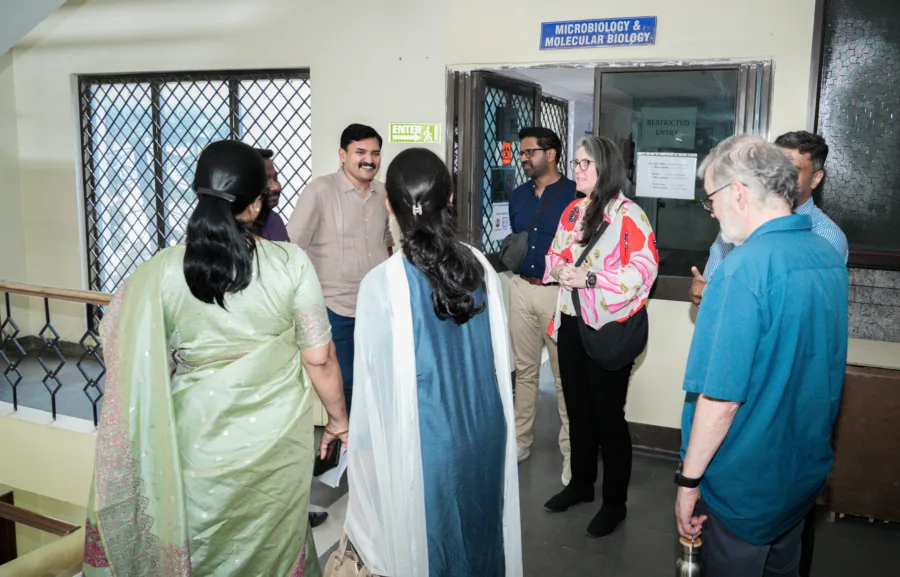
I recently spent some time with my colleagues in India, where I visited two of our projects aiming to accelerate the elimination of TB in urban settings across the states of Telangana and Delhi. They focus on the implementation of population-wide screening, evaluating various tools and methods in order to identify the most effective approach to take in practice.
It is early days for both projects, but it was incredibly inspiring to see for myself the dedication of my colleagues in the field and the impact their work is having for local communities. They really exemplify what The Union is all about.
- What is The Union’s key focus areas for the year ahead?
TB prevention and care remain central, but our focus for the year ahead is on playing our role as the pathfinder for technical and scientific expertise in lung health. This includes generating evidence for high impact interventions, supporting the introduction of new tools across the care continuum, and creating clear implementation pathways for scale. A major priority is preparing countries and partners for the uptake of innovation, including new diagnostics, treatment regimens and vaccines. Alongside this, we are strengthening our commitment to capacity building, ensuring that knowledge, training and tools reach those working on the frontline. We are also intentionally expanding our work beyond TB to address broader lung health challenges, particularly chronic respiratory diseases, where the burden is growing rapidly in low- and middle-income countries. Finally, we are placing greater emphasis on mobilising our membership as a global network of scientific expertise, leveraging this convening power to drive collaboration, innovation and impact at scale..
- Are there any upcoming events, initiatives, or campaigns that The Union is leading or participating in?
Watch this space for The Union’s presence at this year’s World Health Assembly, but the main event to flag has to be the Union World Conference on Lung Health, taking place in Rio de Janeiro, Brazil, from 17-20 November. This is the platform that brings together researchers, practitioners, advocates, policymakers and communities from around the world to share knowledge, exchange ideas and accelerate progress in lung health. Submissions are now open, so if you have new research and experiences to share, be sure to explore the various format options.