
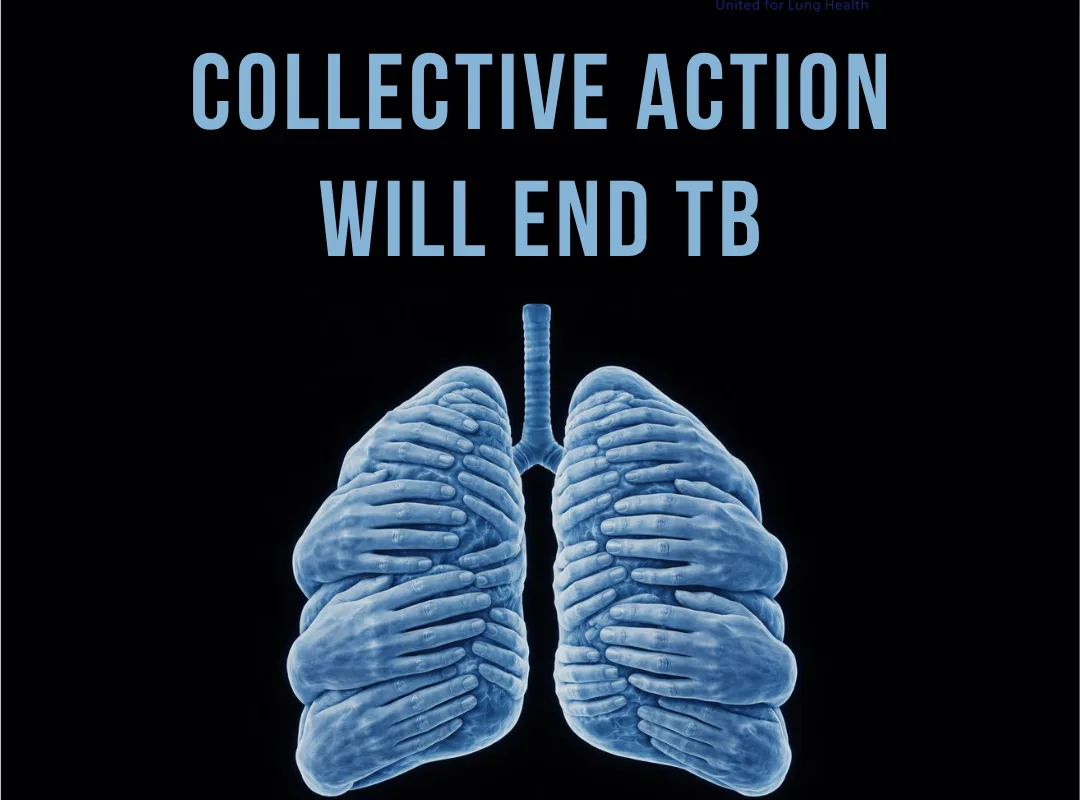
On World TB Day 2026, FIRS is urging governments, international agencies, and the global health community to prioritise evidence-based strategies to stop tuberculosis (TB) transmission and accelerate progress toward ending the disease.
Dr Cassandra Kelly-Cirino is the Executive Director of the International Union Against Tuberculosis and Lung Disease (The Union), a FIRS member, said: “Every year we state that we have the tools to treat, cure, and prevent TB, yet the current strategy is not working and will not achieve an end to TB.. Without a real shift in approach, this cycle will continue. Something must change.”
Despite advances in diagnosis, treatment, and prevention, TB remains a major global health challenge. According to the World Health Organization, over 10 million people develop TB each year, and approximately 1.25 million die. Without a strategic change, global targets to end TB by 2030 and 2035 are unlikely to be met.
Scientific evidence is clear: TB spreads through undiagnosed and untreated infectious individuals. Most TB disease results from recent transmission, and over half of those with active TB may have no symptoms but remain infectious. FIRS calls for prioritising interventions that will reduce TB incidence in high-burden settings, particularly community-wide screening linked to effective treatment.
Kelly-Cirino explained: “If we find and treat everyone with TB, we prevent exposure, stop new infections, and halt onward transmission. This is how we break the chain of TB.”
This approach is proven. Historical evidence from Europe, North America, Japan, and Australia shows that similar strategies sharply reduced TB incidence in the latter half of the 20th century. Today’s diagnostics and treatments offer even greater potential.
While funding constraints and geopolitical instability have slowed TB programmes, FIRS stresses that these challenges cannot delay high-impact, evidence-based interventions. Reducing TB incidence—new infections—must remain the priority.
Ending TB requires action across governments, funders, healthcare professionals, researchers, civil society, and communities. TB disproportionately affects low- and middle-income countries, and these inequities must be urgently addressed. TB is not inevitable.
FIRS calls on world leaders and donors to urgently invest in interventions that stop TB transmission, including:
- Implementing community-wide screening in high-burden settings with technical and community guidance
- Expanding access to modern diagnostics and effective treatments
- Strengthening accountability for sustained reductions in TB incidence
Professor Guy Marks, President of The Union and Outgoing President of FIRS, concluded: “This is the only way to honour their commitments to end TB, end needless suffering, and protect communities. As champions of lung health, FIRS will continue advocating for evidence-based strategies and giving communities a platform to be heard.”
FIRS reaffirms its commitment to working with member societies and partners worldwide to advance lung health, support communities, and promote science-driven approaches to ending TB.